
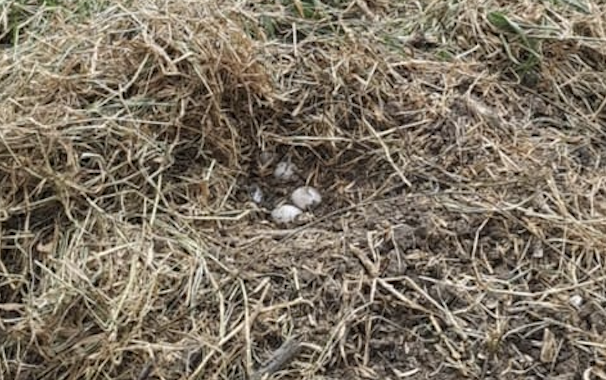
It is June and, with a little delay, the rains have finally arrived.
For us, this brings both advantages and disadvantages. The disadvantages are mainly related to the cognitive experiments, because when it rains, we absolutely have to suspend them. The amount of rain that can fall in just a few minutes risks damaging the equipment, distracting the crocodiles, excessively filling the pools with water and, more generally, preventing us from working under suitable conditions.
On the other hand, however, the arrival of the rains also brings something extremely important: female crocodiles can finally lay their eggs.
The period of nest-building and egg-laying has therefore officially begun, although later than expected, precisely because the rains themselves arrived late. The soil is now softer and more suitable for digging, and the females can dedicate themselves to preparing their nests.
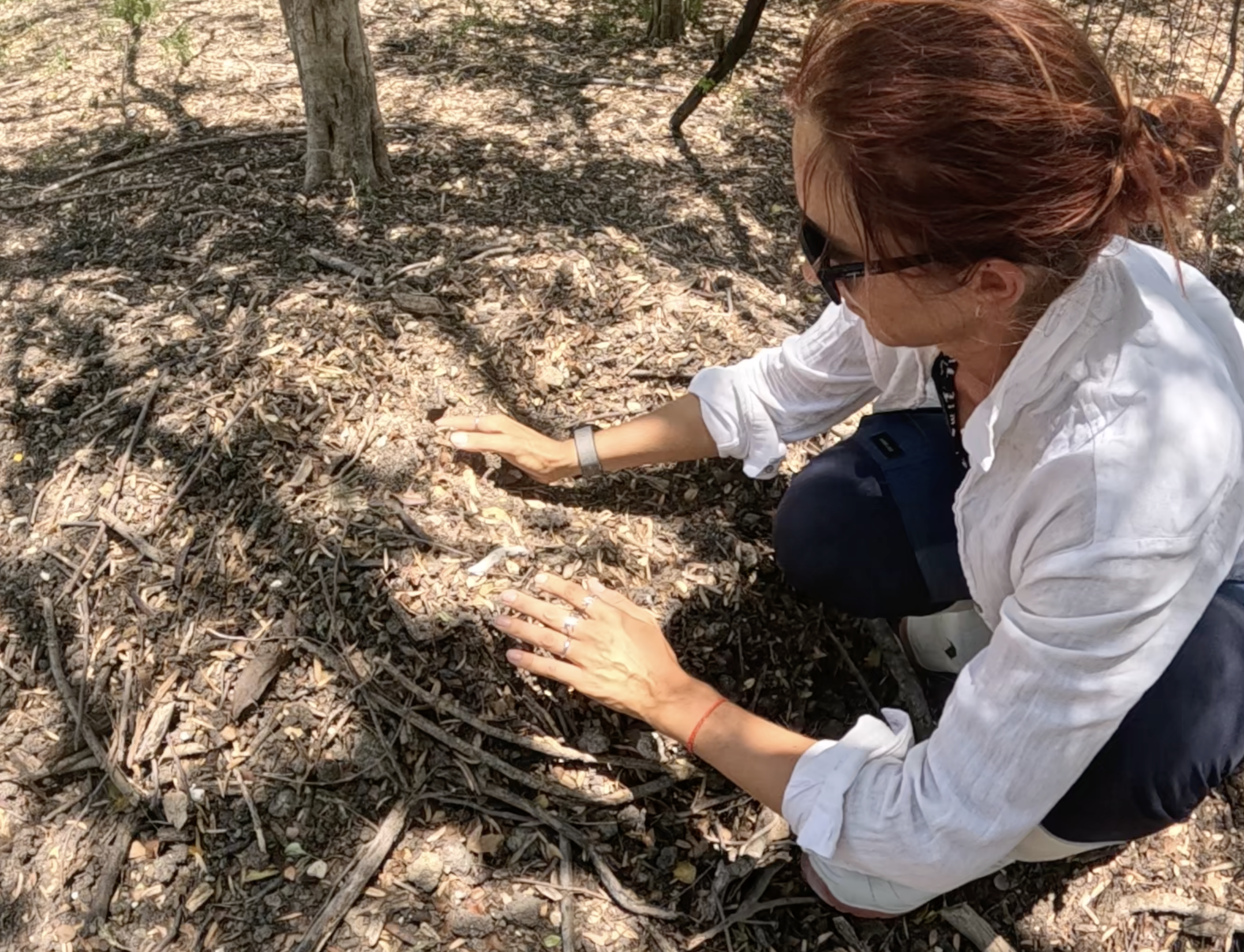
At the farm, we realise that a female has laid eggs because the nest appears as a mound of soil that she never really stops monitoring. Sometimes she stays on top of it, other times she remains nearby. If she is in the water, perhaps to thermoregulate, it is enough to get a little too close to that mound to understand that the nest is anything but abandoned… in fact, the female comes out of the water to chase you away.
And I can assure you that she does it very well.
At the farm, however, with the aim of reducing mortality as much as possible between egg laying and the hatching of the new generation of hatchlings, the eggs are removed from the nest and incubated under controlled conditions.
The procedure is always carried out by at least two people, depending also on the size and behaviour of the female. We enter the area of the breeding adults and the first thing to do is to locate the mother. Once she has been found, sometimes it is enough for one person to stand guard and make sure she does not get too close, especially if she remains in the water and does not show any intention of actively defending the nest. In other cases, however, if she comes out of the water or is already near the nest, it is necessary to safely restrain her, tie her and temporarily immobilise her, so that the people working on the nest can do so without risk.
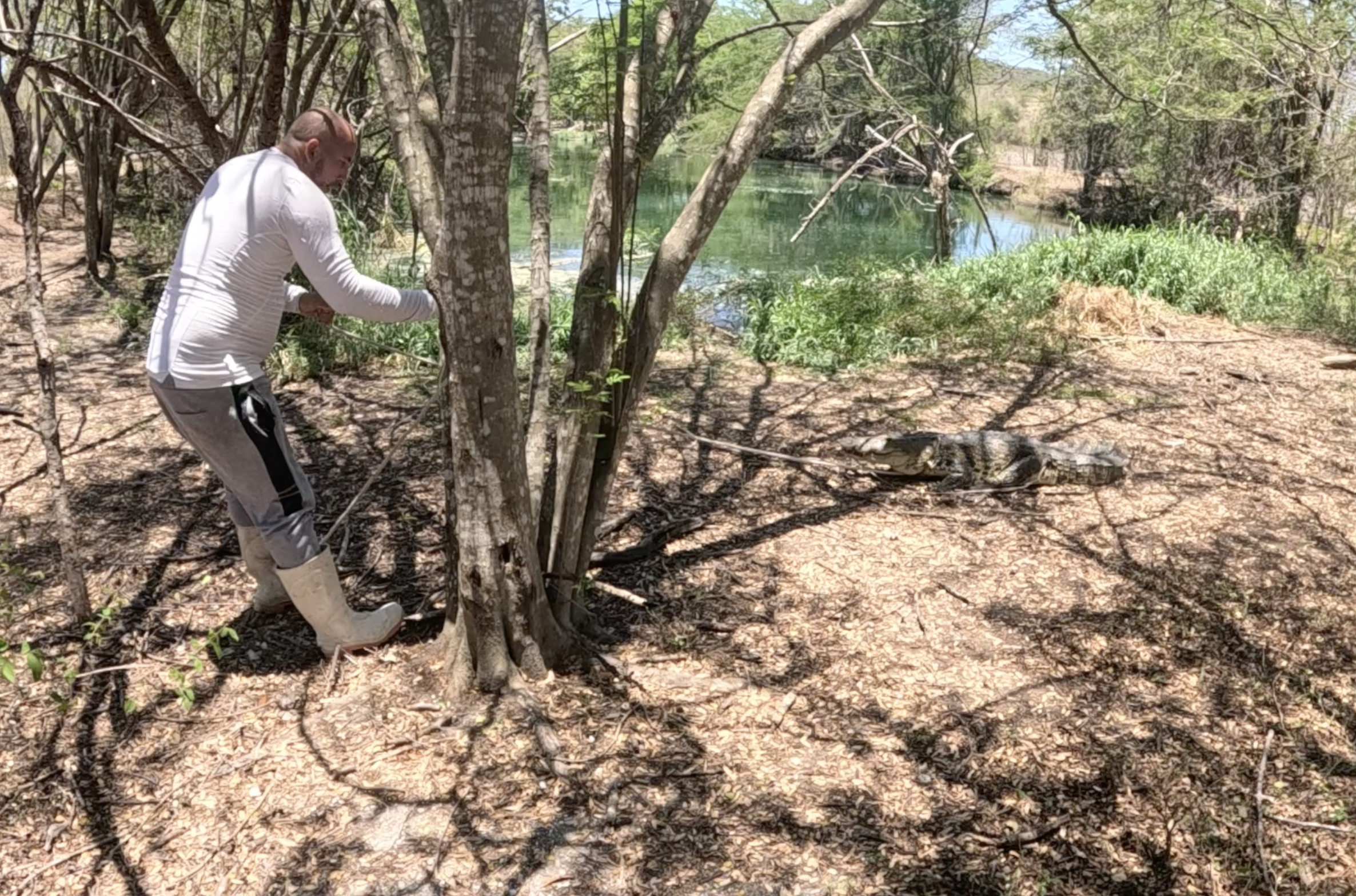
Once the female has been restrained, the digging begins. The nest is opened with extreme care: the upper layers of soil are removed little by little, often directly by hand, until the first eggs are reached.
With some luck, nests can contain more than 15 or 20 eggs. All the eggs are carefully extracted and, in our case, temporarily placed inside a plastic container.
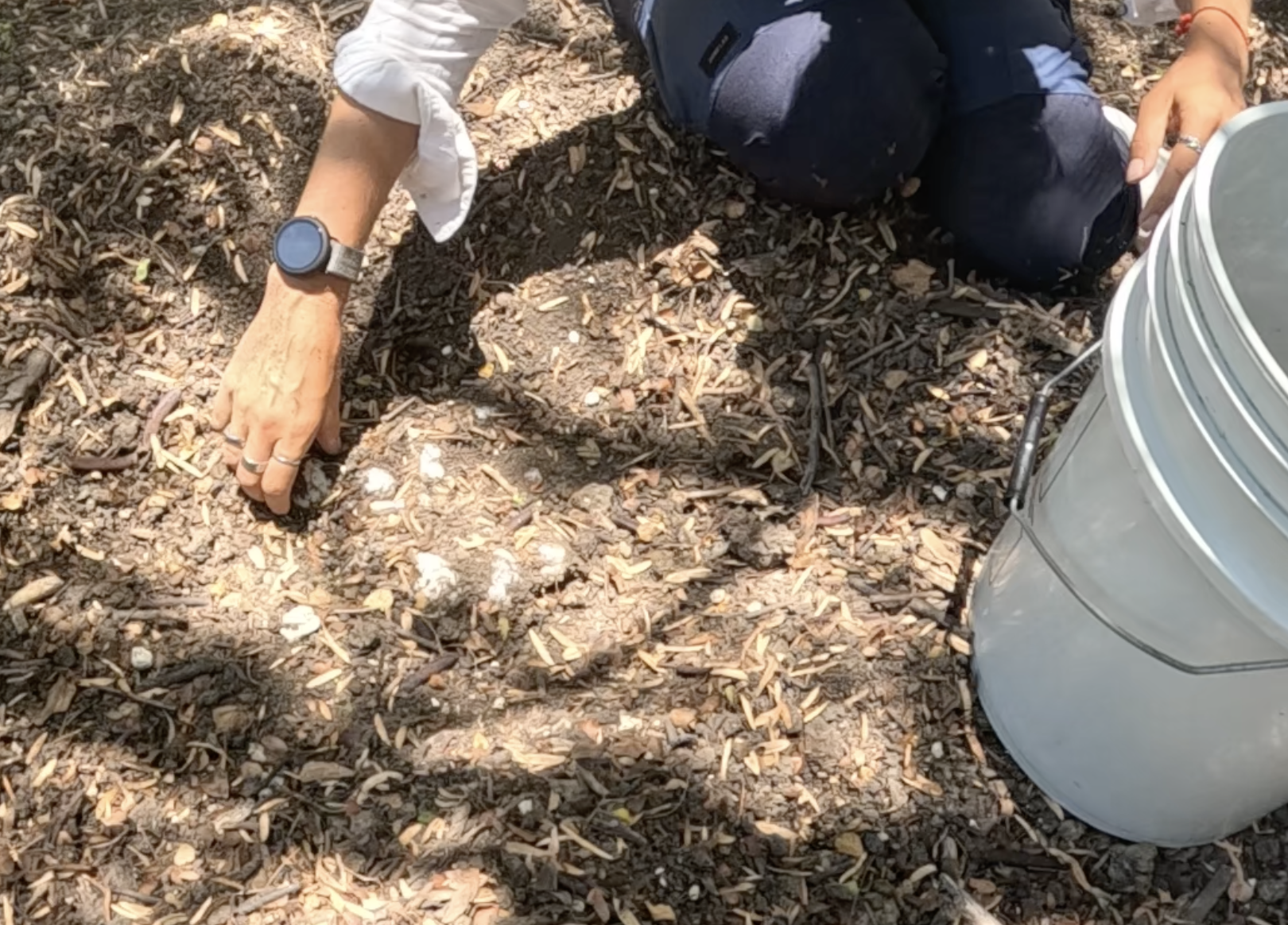
The nest is then closed again, trying to make it look as similar as possible to how it was at the beginning. At that point, the female is released and we leave the area of the breeding adults.
Again with the aim of reducing mortality, this year the farm team decided to clean all the eggs with a simple damp cloth. This helps remove residual soil and the fluids present on the eggs, especially when the nest is very fresh. It also helps reduce the future presence of flies, midges, worms or other insects whose microscopic eggs may have been hidden in the soil around the crocodile eggs.
Once cleaned, the eggs are transferred to a new plastic container prepared with a small amount of substrate. They are then carefully arranged and protected with a thin layer of plastic, lightly perforated to allow air exchange and maintain humidity.
Each container is labelled with the date and general information about the nest and the female. Finally, it is taken to the incubation room, where the temperature is kept controlled and is chosen according to the goals established for that generation of future crocodiles.
All these steps are necessary to reduce the mortality rate and maximise the number of hatchlings that successfully emerge.
I was lucky enough to help with the extraction of two nests, the cleaning of the eggs and the preparation of some of the containers. I would never have imagined being able to touch crocodile eggs with my own hands, remove them from a nest and directly take part in such a delicate procedure.
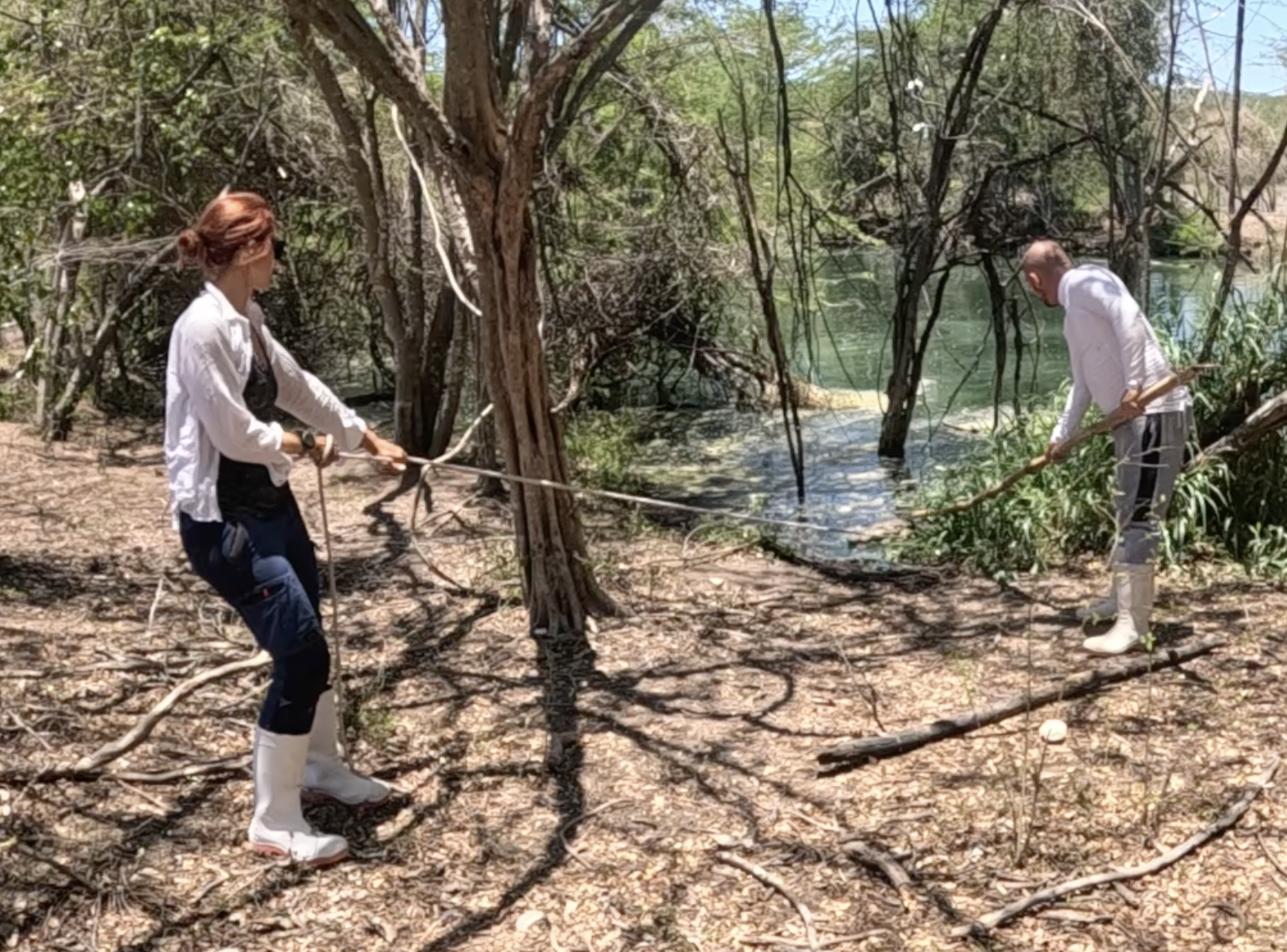
It was an experience I will remember forever. One of those completely unexpected things that this project, like a small side quest, has given me.
Unfortunately, however, I will not see the new generation hatch: the hatchlings should start emerging from August onwards, depending on the laying date of the first nests. Even so, knowing that I contributed, even if only in a small way, to the beginning of this process is something I will certainly carry with me.
F. M. C.