
The short answer would be: “From a tweet read at the right moment.”
But as often happens in research, behind that seemingly random moment lay years of ideas left on hold, collaborations maintained over distance, and a project simply waiting for the right context to take shape.
To tell the story more fully, we need to go back to the end of my PhD. At that time, my former supervisor, Professor Yann Hénaut, and I agreed that if we ever had the chance to work together again on individual differences, personality, and animal behaviour, it would be exciting to do so with crocodiles. It was December 2021, and that idea went into a drawer… Time passed. I returned to Italy from Mexico, where I had completed my PhD, and I worked both within and outside academia. But the idea never truly disappeared. It stayed there, in the background, in that part of the mind where things live when we cannot yet realise them, but cannot fully let them go either.
Toward the end of 2022, the idea briefly resurfaced. I had read about researchers in Sweden working on alligators and crocodiles, which made me think again about developing a behavioural project on these animals. So, I wrote to a dear friend I had met in Mexico, Dr. Marisol Buenfil, asking whether she could connect me with researchers who had access to crocodiles. Her response was immediate and reassuring—something along the lines of “Don’t worry, I’ll take care of it”—and she did. We had an initial video call with a group of crocodile specialists from CEDESU, Dr. Sergio Padilla and Dr. Mauricio Jáuregui, who showed interest and willingness to support a potential behavioural project by providing access to animals and expertise. Unfortunately, that first attempt did not materialise, and the idea went back into the drawer.
At least for a while.
At the end of 2023, while I was still searching for a way to return to working on individual differences in animals, I came across a tweet by Professor Claudia Wascher, expressing her availability to host students and researchers interested in animal cognition. So, I took some time, read more about her work, and then wrote again to Marisol, Sergio, and Mauricio, telling them I was planning to contact Claudia—and, essentially, that if they were still available with the crocodiles… we should all cross our fingers. If I am telling this story, it means that first video call with Claudia went well. It was her idea: let’s write a Marie Skłodowska-Curie proposal.
I must admit that, knowing how difficult it is not only to write but especially to secure that kind of funding, the idea initially intimidated me. However, Claudia’s support throughout the entire writing process, together with all the people who read and commented on the drafts, allowed me to experience those months as something I would describe as “calmly stressful”: stressful because of the importance of what we were writing, but calm because of the strong support network forming around the project.
What had started as a general idea, studying individual differences, personality, and behaviour in crocodiles, gradually became more defined. Thanks to Claudia’s expertise, it evolved into a project on the evolution of cognitive plasticity in crocodiles, focusing on differences between individuals and cognitive abilities across life stages. The Marie Skłodowska-Curie call opened, if I remember correctly, in April 2024, but we had already started shaping the project in March. Writing what would become EvOCRO took several months. The deadline was September 11, and I submitted the project, with all the required documentation, on September 10, 2024. You can do the math on how many months of writing that means—I can assure you that every possible day was used. Meanwhile, I was working as a waitress, waiting and hoping to obtain funding that, despite believing in the project, still felt almost impossible. I wrote whenever I could: in spare moments, on days off, whenever time allowed. And while the project was taking shape, I kept thinking how exciting it was—but also how difficult it would be to achieve.
The waiting was long. Until February 2025, close to my birthday, when the email arrived confirming that EvOCRO had been selected for European funding. I still remember that strange, almost unreal feeling. For months I had been writing a project I deeply believed in, yet at the same time perceived as nearly impossible. And yet, it had happened.
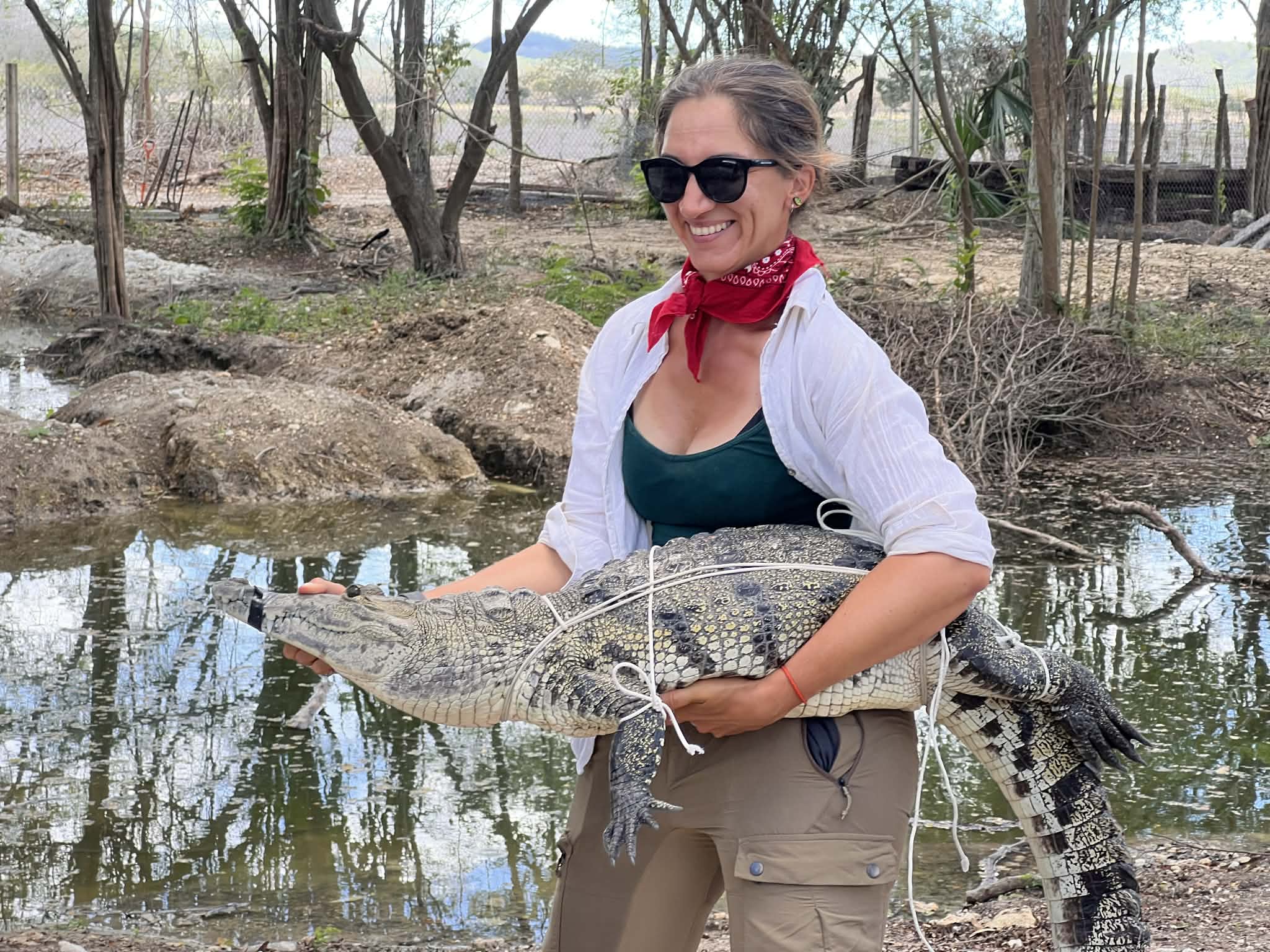
What in December 2021 had been just an idea mentioned at the end of my PhD, one of those “maybe one day” thoughts, had become a real project. EvOCRO was not born in a single moment. It emerged from attempts, waiting, messages, people who believed in the idea, and coincidences that happened at the right time… like that tweet, which found an idea already there. An idea kept in a drawer, yes—but never truly forgotten.
F.M.C.
(header image by Peter Olexa from Pixabay)