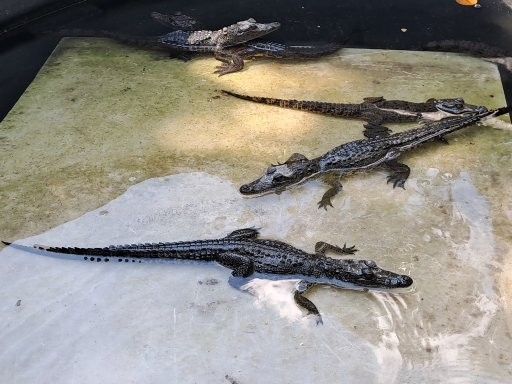
Hi everyone, today it’s time to tell you a bit more about our experiments and the daily routine that some humans working in a breeding facility are subjected to on a daily basis. Every day we test around twenty crocodiles; when I say “test”, it means that we place them in individual pools and, depending on the phase of our project we are in, we begin the cognitive tests, which we will explain in more detail in the future. But before getting to them, what do we do? How do we prepare ourselves? So, the experimental day starts at around 8:30, when I arrive at UMA. We go to the experimental area, where the individual pools are located, and we start cleaning them of leaves, soil, and anything that may have accumulated overnight. To do this, we first remove the separators that we created to reduce the size of our pools, made of bricks and tiles, and then we position the platform on which we will place the stimulus and/or the food in the designated point for that day, and we turn on the water pump. After that, we begin filling 7 pools for the first round. We set up the cameras, the batteries, and the SD cards, and place them at the edge of the pools so that they can capture the entire area. Once this is done, when the pool is full, we place the food, the stimulus, or the stimulus + food, depending on the training phase the crocodile is in. Finally, the dividers are closed so that the pool is in some way sealed, and one by one, we go and collect the crocodiles, while the cameras are turned on.
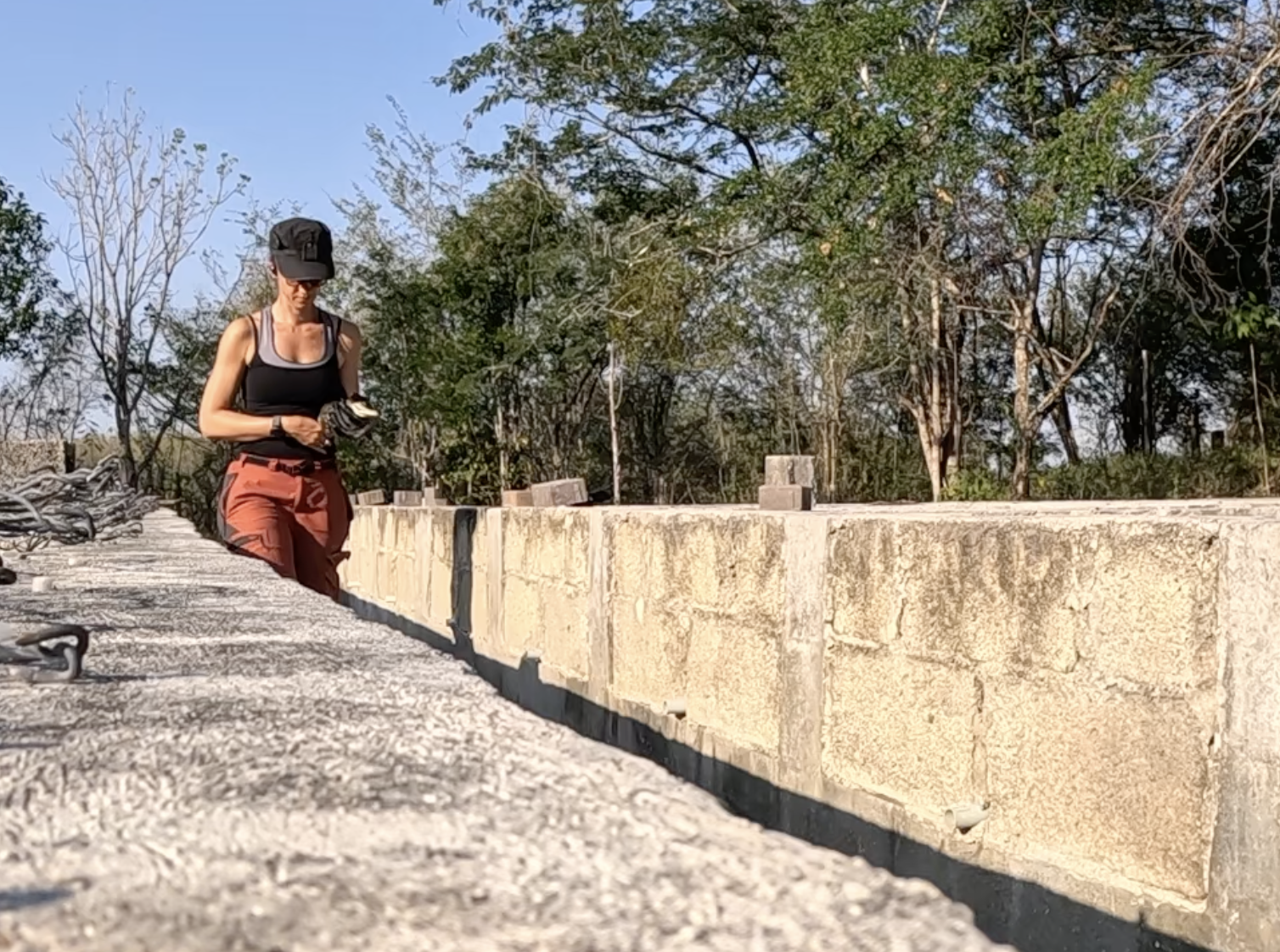
The experiments then begin, during which we observe the animals for a pre-determined period of time or until they have completed the entire training session, which, if it ends before the agreed time, is nothing but a source of joy for us! Since we cannot blindly rely on the cameras, we always keep a notebook to record when the animals have eaten and other notes we believe may be important later, when the data will be analysed. When all the animals have finished, the pools are reopened, emptied, cleaned, and prepared for the second group of animals… and we continue like this until 5 p.m., sometimes 5:30 if things have not gone as planned. Of course, not everything was perfect from the beginning. There are many things we have improved thanks to pilot experiments and along the way. One of these was the separation wall, because crocodiles are skilled escape artists!
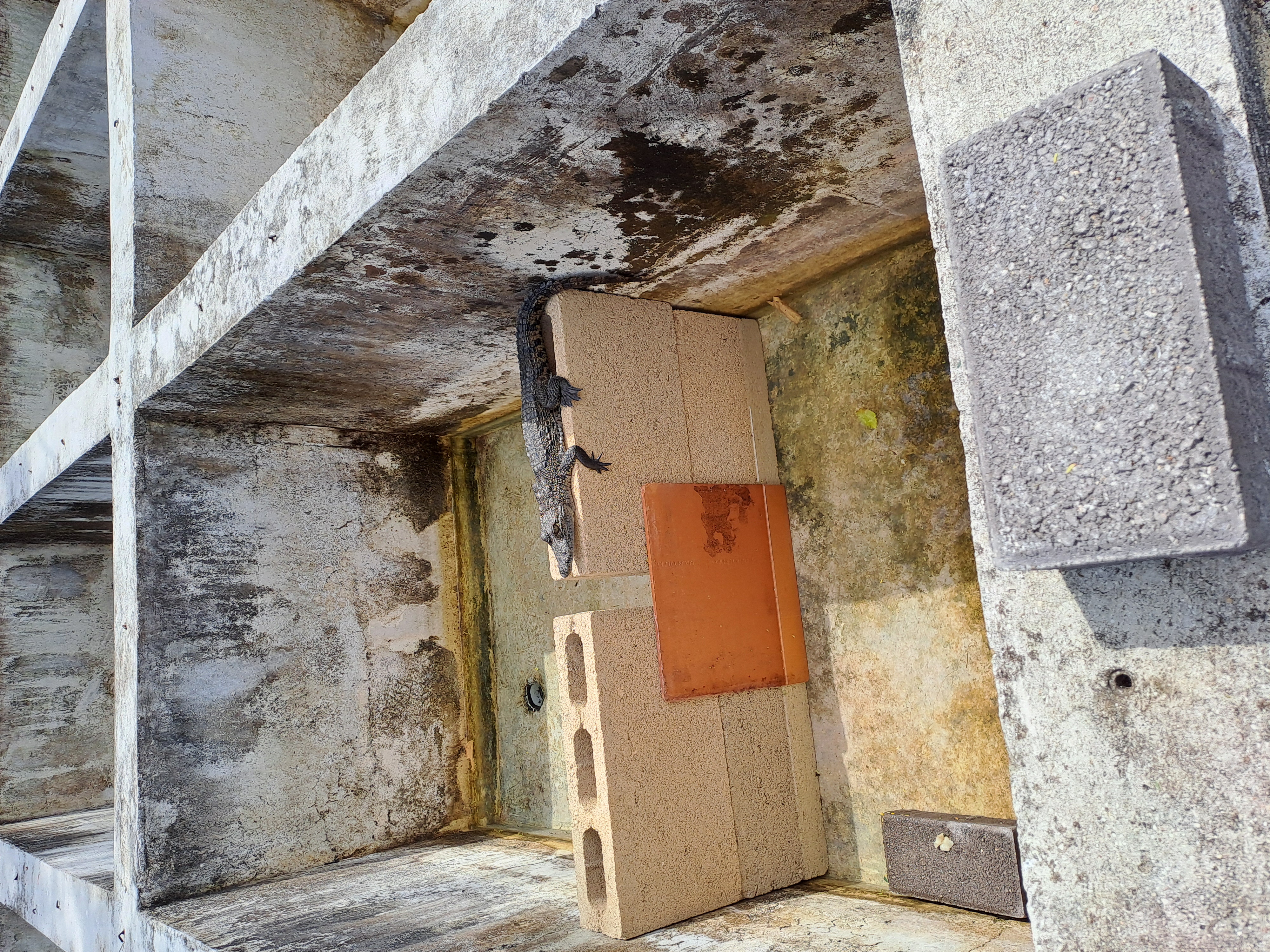
Initially, we had placed only four large bricks and two central ones, when possible, to prevent them from moving to the other side, but we had not considered their small claws, which allowed our friends to climb through the pores of the bricks. We therefore decided to create a layer of cement over the bricks and smooth the structure, thinking we had solved the problem… but they are smarter, especially the young ones, and they managed to push themselves up with their tails, climb the walls, and jump to the other side of our barrier. We had no other option but to create a roof made of tiles… and for now it seems to work, even though the crocodiles keep trying… these animals really do not want to stay in class and learn!
At the end of the day, the animals are returned to the group pools, the individual ones are opened, and we go back home. The day, however, is not over. As far as I am concerned, it continues with charging all the batteries used, which are about twenty and must be ready for the next day; transferring the videos to external hard drives and replying to all pending emails, or any other documents to write, like this one you are reading right now. This part, however, has to be done alone by me… the hours left to sleep are few and sometimes not enough, especially when important meetings have to be held across time zones. It is tiring, yes, very much so, but I try to enjoy every moment, because my time in Mexico will end in a few months, and then I will be back to sitting behind a desk. But do not think that the work is over at that point! Because it is with data extraction and analysis that we will finally see whether our work has paid off!
F. M. C.